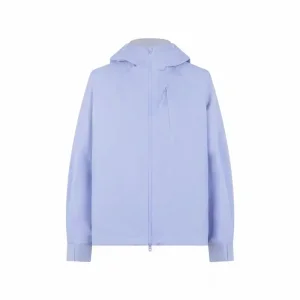
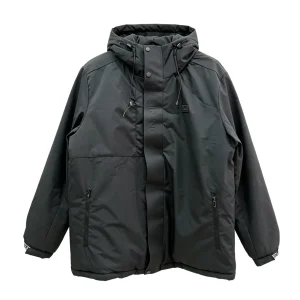
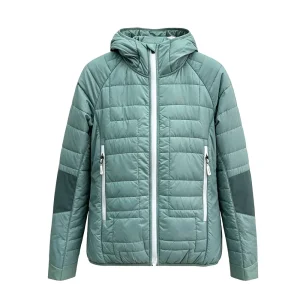
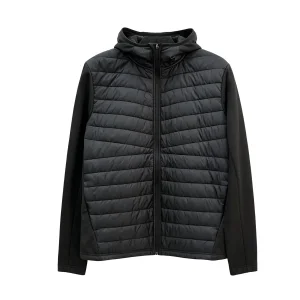
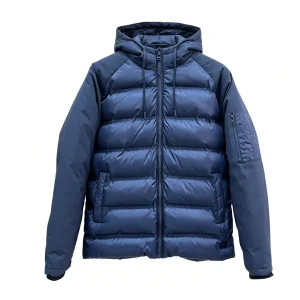
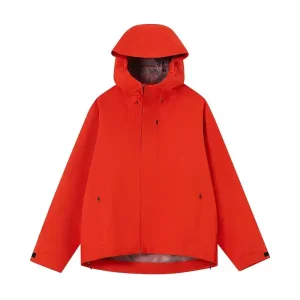
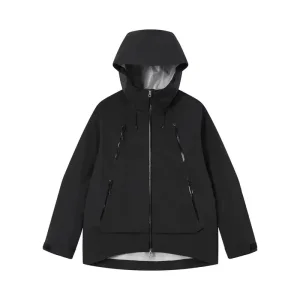
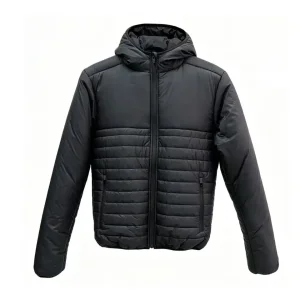
Direct from our Quanzhou lean manufacturing hub. Optimized for ergonomic mobility, calibrated microclimates, and extreme alpine weatherproofing.
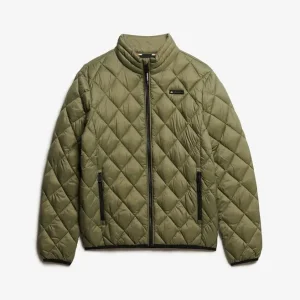
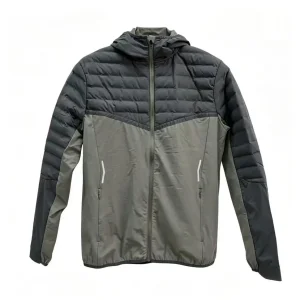
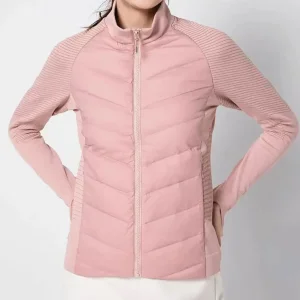
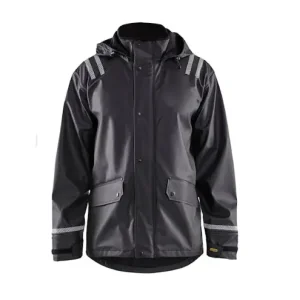
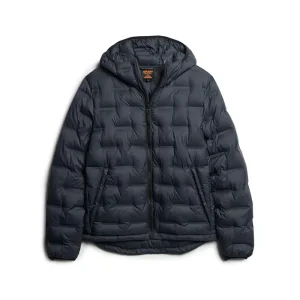
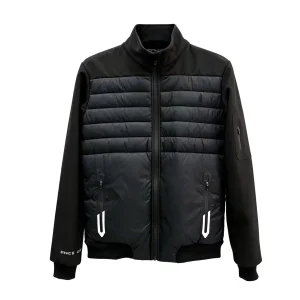
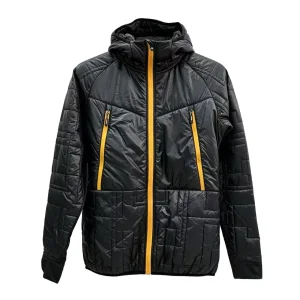
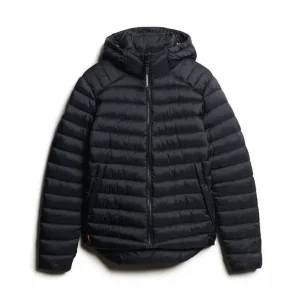
Bridging the structural void between rigid hard-shell weather barriers and high-loft thermal mid-layers across commercial, defense, and recreational sectors.
Modern commercial supply chains have moved beyond simple micro-polar fleeces. Today’s industrial requirements demand PTFE/TPU microporous and hydrophilic non-porous membranes bonded precisely between high-denier recycled polyester face fabrics and moisture-wicking waffle backings.
The boundary separating outdoor adventure gear from industrial Personal Protective Equipment (PPE) has permanently blurred. European and North American industrial procurement entities mandate certified softshell outer garments that satisfy EN ISO 13688 alongside weather resistance standards.
End consumers now demand apparel that functions continuously across high-exertion transitions. Sourcing directors require dynamic air permeability (0.5 to 2.0 CFM) combined with hydrostatic resistance exceeding 10,000mm to eliminate condensation buildup during intense tactical and mountaineering operations.
A rigorous engineering benchmark verifying legal import, chemical non-toxicity, and mechanical durability across the European Single Market.
| Directive / Harmonized Standard | Test Parameters & Thresholds | Factory QC Verification Method | Commercial Sourcing Impact |
|---|---|---|---|
| PPE Regulation (EU) 2016/425 (Cat I & II) | Ergonomics, innocuousness (ISO 13688), size gradation, dimensional stability across multiple washes (<3%). | In-house dimensional stability tracking, pre-shrinkage baths, and accredited Notified Body (TÜV/SGS) module testing. | Mandatory legal prerequisite for commercial distribution across all 27 EU member territories. |
| EN 343:2019 (Water Penetration & Breathing) | Hydrostatic Head: Class 3/4 (>13,000 Pa). Water Vapor Resistance (Ret): Class 4 (Ret < 15 m²·Pa/W). | Pneumatic hydrostatic testing towers (ISO 811), hot-air seam-taping peeling verification (>15 N/50mm). | Prevents internal condensation hypothermia in occupational foul-weather exposure environments. |
| EN ISO 20471:2013+A1:2016 (Hi-Vis Workwear) | Chromaticity coordinates (fluorescent yellow/orange/red) and photometric retroreflective tape performance (>330 cd/(lx·m²)). | Spectrophotometer colorfastness testing, xenon arc light exposure, 50-cycle industrial laundering validation. | Required for municipal utility, road freight, aviation ground handling, and civil engineering workforces. |
| EU REACH Annex XVII (Chemical Safety) | Absence of hazardous chemicals: PFOS/PFOA (<25 ppb), Azo dyes (<30 mg/kg), Lead (<500 mg/kg), and total phthalates (<0.1%). | Strict OEKO-TEX Standard 100 Class I/II certified raw material sourcing; lot-level GC-MS laboratory audits. | Guarantees complete non-toxicity for skin contact; indemnifies brand owners against regulatory recalls. |
Why Tier-1 Chinese manufacturing clusters remain the global apex for technical garment production speed, cost optimization, and composite quality.
Within a 30-kilometer radius of our Quanzhou factory sits complete vertical upstream integration: functional weaving mills, reactive dyeing facilities, polyurethane film coating plants, high-tensile poly-core thread producers, and YKK/SBS zipper forging lines. Lead times for specialized raw materials are compressed by 65% compared to fragmented Southeast Asian setups.
Softshell garments compromise insulation if needle perforations leak heat or water. Our production lines integrate computerized multi-ply laser-cutting beds that cauterize fabric edges, paired with ultrasonic seam-welding and high-pressure pneumatic taping systems that execute stitchless bonded pocket garages and storm plackets.
From initial Gerber/Optitex 3D pattern development and virtual prototyping to synchronized ERP floor tracking, our Quanzhou hub drives maximum throughput. Every production lot is barcode-tracked across spreading, bundling, stitching, seam-sealing, and final automated steam pressing, ensuring 98.5% first-pass yield.
Custom engineering across high-stress alpine, maritime, tactical, and commercial corporate fleet environments.
Engineered with 4-way mechanical stretch nylon shells, articulated pre-curved sleeves, helmet-compatible three-point hoods, and deep underarm waterproof pit zips for heat dumping during vertical ascents.
Durable, wrinkle-resistant twill softshell surfaces with customized Teflon eco-elite stain repellency, internal radio/tablet pockets, and mic-clip loops built for couriers and rail personnel working in wet terminals.
Muted non-reflective matte outer fabrics, silent brushed backings for noise discipline, dual-side weapon access zippers, hook-and-loop patch receivers, and fleece-lined high collar wind guards.
EN 343 Class 3/4 certified constructions featuring cold-resistant PU lamination (-25°C flexibility), anti-abrasion Cordura elbow panels, and segmented heat-transfer reflective strips for nighttime visibility.
Keeping global retail brands and corporate buyers ahead of regulatory bans, circular economy laws, and active warming technologies.
With impending EU REACH restrictions and US state bans on intentional PFAS/PTFE chemistries, our factory has transitioned completely to bio-based, plant-derived C0 Durable Water Repellent finishes. These treatments achieve 80 points after 20 commercial washings without ecological compromise.
Traditional softshell garments face recycling bottlenecks due to polyester faces bonded with polyurethane films and nylon linings. We lead development in 100% Mono-Material Polyethylene Terephthalate (rPET) solutions—where face, membrane, and fleece backer are chemically identical, allowing complete post-consumer cradle-to-cradle recycling.
Softshells are increasingly specified as active heating jackets. By integrating flexible multi-zone carbon-fiber or graphene heating elements powered by 5V USB/7.4V battery circuits into our softshell matrix, we deliver microclimate regulation across temperatures down to -30°C without adding bulky down fill.
Essential verification milestones for supply chain managers, brand directors, and corporate procurement heads prior to PO signing.
Authoritative, transparent answers to the most critical technical questions submitted by international brand managers and apparel buyers.
Category I covers garments intended for minimal risks, such as light rain or foul weather without extreme hazards; manufacturers self-certify under EN ISO 13688. Category II covers intermediate risks, including high-visibility (EN ISO 20471) or severe precipitation and cold (EN 343), requiring mandatory EU Type Examination by a notified third-party test body.
We deploy computerized hot-melt PUR (Polyurethane Reactive) adhesive gravure lamination rather than traditional water-based glue coating. This creates a cross-linked crystalline bond between the face fabric, functional microporous membrane, and fleece lining that remains stable across extreme thermal shifts and repetitive washing.
For custom ODM selections, sample prototypes ship within 5 to 7 working days. For custom OEM developments requiring lab dips, strike-offs, and bespoke membrane lamination, sampling takes 10 to 14 days. Bulk container production takes 35 to 50 calendar days following pre-production sample sign-off, backed by our 80,000 unit monthly output.
Yes. Our in-house engineering and QA team compiles full Technical Files—including pattern diagrams, material risk analyses, REACH lab test reports, CE marking label proofs, and bilingual Declarations of Conformity (DoC)—accelerating formal module audits via partner laboratories like SGS and TÜV.
Standard minimum order quantities start at 500 to 800 pieces per style across 2 colorways using standard in-stock performance fabrics. For fully bespoke yarn dyeing, custom pantone hues, or specialized proprietary membrane prints, our standard production threshold is 1,200 pieces.
Yes. Our dedicated heated apparel workshop produces CE, RoHS, and FCC certified heated softshell jackets. We engineer custom carbon-fiber and graphene heat pad layouts, integrated 5V/7.4V water-resistant wiring channels, and smart silicone LED controller switches certified safe for machine washing.
Fully customizable for international distributors, e-commerce brands, corporate fleets, and institutional procurement contracts.