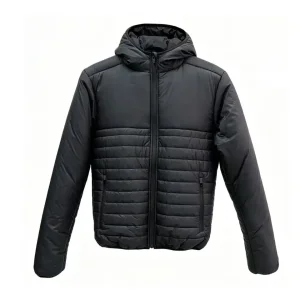
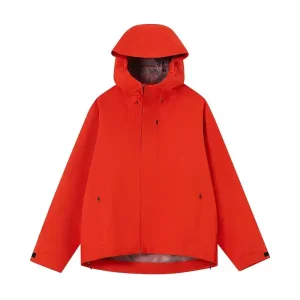
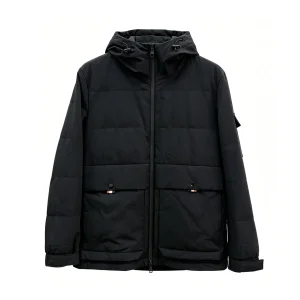
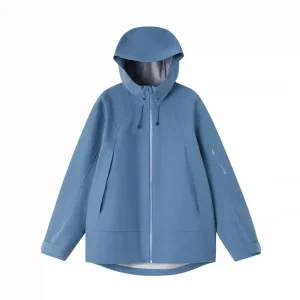
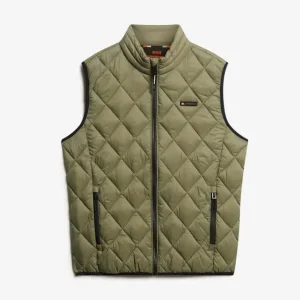
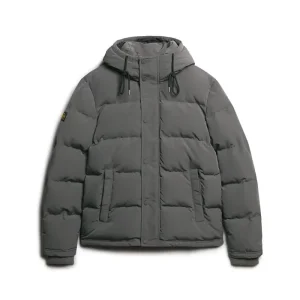
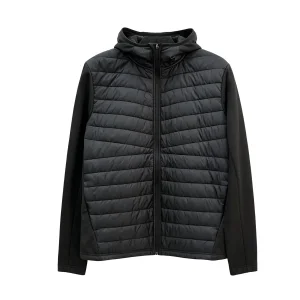
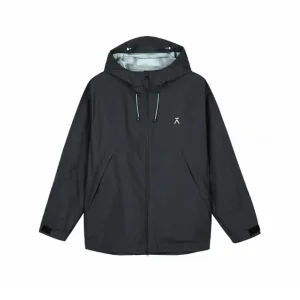
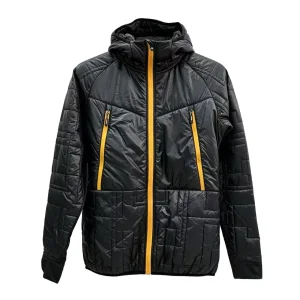
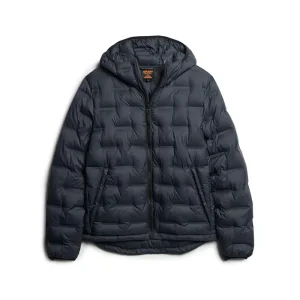
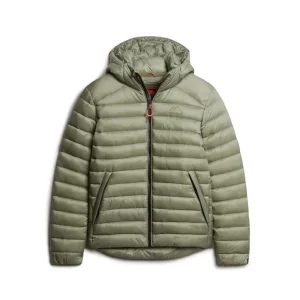
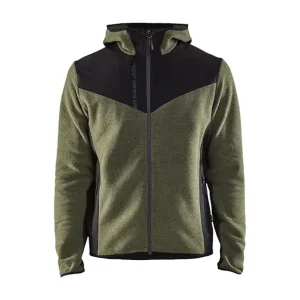
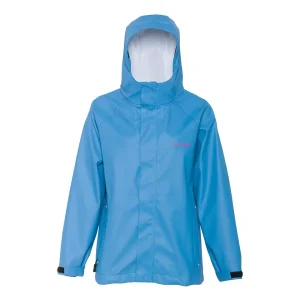
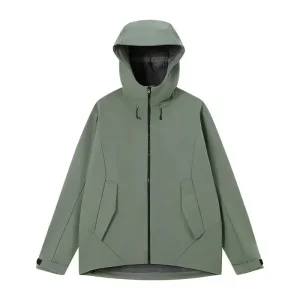
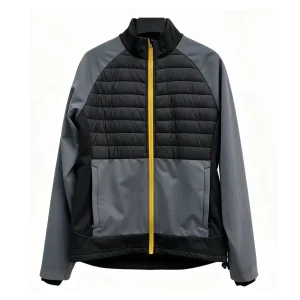
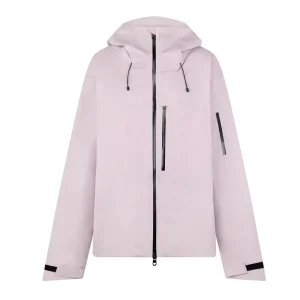
Explore our export-ready technical builds engineered with advanced synthetic cluster insulation, hydrostatic waterproofing, and ergonomic baffle mapping.
Analyzing macroeconomic supply chain dynamics, raw material commoditization, and consumer pivot toward cost-efficient thermal outerwear.
Global volatile raw down auctions and ethical traceability pressures (RDS compliance overheads) have driven international volume brands toward engineered synthetic blowable clusters. Synthetic fills provide predictable FOB pricing models immune to seasonal poultry sector fluctuations.
Unlike natural goose or duck down that collapses and loses up to 90% of its Clo value upon moisture ingress, siliconized micro-denier polyester fiber filaments maintain structural loft and interstitial air entrapment even under 95% relative humidity and torrential conditions.
Synthetic batting and blown hollow-core fibers integrate seamlessly with automated high-speed baffle-injection equipment. This eliminates the manual down weighing bottlenecks, slashing per-unit labor costs in large-scale OEM runs across our 5,000+ sqm lean facility.
Operating since 2004 with modernized Quanzhou infrastructure, ZanQian Garment delivers audit-ready mass apparel manufacturing.
Rigorous thermal lab benchmarks guiding global outdoor brands, workwear contractors, and discount retail chains.
| Evaluation Parameter | High-Loft Synthetic Microfiber (ZanQian Spec) | Conventional Duck Down (550 Fill Power) | Commercial Advantage for Importers |
|---|---|---|---|
| Dry Clo Rating (Warmth Efficiency) | 0.75 - 0.92 per 100 g/m² | 0.85 - 1.00 per 100 g/m² | Near-down parity with zero structural shedding issues. |
| Wet Performance Retention | 88% - 94% thermal retention intact | Collapses to < 20% insulating capacity | Crucial for industrial workwear and marine mountaineering. |
| B2B Unit Cost Index | Base Reference (1.0x Cost Efficiency) | 2.8x - 4.5x Volatile Market Cost | Substantially protects retail margins in discount/mass retail. |
| Seam Migration & Leakage | Negligible filament leakage; heat-press sealed | Requires expensive down-proof high-density cire | Enables lower fabric procurement expenditures. |
| Hypoallergenic & Care Cycle | Non-organic; Machine washable & fast-drying | Organic odor risks; Specialist cleaning required | Dramatically reduces retail consumer return rates. |
Engineered to adapt to distinct climatic, functional, and regulatory environments around the world.
Engineered for high dampness and freezing winds. Combines 40D mini-ripstop wind-resistant outer shells with 120 g/m² hollow-fiber insulation, ideal for everyday rain-and-sleet urban commuting.
Heavy-duty multi-pocket builds utilizing polyester canvas outer layers reinforced with bar-tack stitching. Withstands machine washing, petrochemical exposure, and abrasive worksite operations.
Incorporates seamless ultrasonic heat-welded baffle technology (WOD05131 specs) that eliminates needle perforations, maximizing body heat retention in high-altitude environments.
How ZanQian’s R&D center is leading the transition into circular and functional thermal innovation.
Replacing virgin polyester filaments with post-consumer recycled ocean plastics (GRS certified), reducing the product carbon footprint by up to 48%.
Synthesizing silica aerogel particulates directly into polymer melt-blown fibers to generate 1.5x insulation values without increasing garment thickness.
Direct integration of low-voltage flexible carbon-fiber heating arrays within synthetic baffles, providing active microclimate controls.
Piloting marine-biodegradable synthetic fibers that break down safely in wastewater conditions without shedding microplastics.
Overcoming tariff barriers, raw material price swings, and stringent ESG compliance audits.
By establishing long-term futures contracts with certified Chinese poly-cluster and taffeta mills, ZanQian shields clients from off-season raw material price spikes, guaranteeing fixed-price contracts across peak order seasons.
Our in-house R&D team outputs 30–50 ready-to-produce styles monthly. Private-label buyers can bypass initial R&D cycles and accelerate seasonal time-to-market by 4 to 6 weeks.
All fabrics, water-repellent DWR coatings (PFC-free options available), and synthetic fillings meet OEKO-TEX Standard 100, REACH, and BSCI social compliance parameters, avoiding costly port seizures.
Explore additional styles from our comprehensive manufacturing catalog, covering lightweight puffers, extreme cold gear, and technical workwear.
Comprehensive answers addressing commercial terms, thermal validation, and custom manufacturing workflows.