Engineered with industrial rigor and precision craftsmanship. Explore our primary export programs produced under ISO-certified lean manufacturing lines in Quanzhou, China.
The women's loungewear and sleepwear sector has fundamentally transitioned from basic commodity production into an advanced intersection of sensory biometrics, athletic ergonomics, and multi-functional leisure aesthetics. Modern international procurement heads seeking China Shorty Pajamas For Ladies Quotes & Exporters are navigating a market driven by intense consumer expectations for sustainable raw fiber blends, thermal comfort regulation, and seamless versatility.
Global retail analytics demonstrate that women's shorty sets—typically consisting of cropped short-sleeve tops or camisoles paired with tailored drawstring or elastic-waist shorts—now represent over 34% of summer seasonal sleepwear demand in Western markets. B2B buyers no longer evaluate suppliers purely on minimum unit cost; sourcing decisions hinge upon fabric performance data, micro-climate thermal management, and rapid ODM turnaround capabilities.
Strategic benchmarks defining modern women's shorty pajama manufacturing across OEM/ODM export contracts:
Consumer search intent reveals high resonance with "daywear-appropriate" loungewear. Shorty sets are engineered with opaque weights (180–220 GSM), clean French piping, notch collars, and side-slit pockets, seamlessly converting from private bedroom apparel to relaxed casual daywear.
Exporters must meet rigorous environmental metrics in European and North American procurement channels. Sourcing flows are heavily concentrated in Lenzing Modal, bamboo viscose, and GOTS-certified organic cotton to satisfy ESG mandate frameworks.
Real-time pricing predictability determines supplier retention. Modern quotation matrices deconstruct FOB/CIF rates through transparent costing structures: fiber yield, cutting waste margins, seam-sealing embellishments, and ocean freight logistics modeling.
Shorty pajama sets demand an exacting balance of tactile softness, dimensional stability, and durable seam integrity. Review our material matrices and engineering tolerances.
| Material Classification | Composition & Yarn Count | Fabric Weight (GSM) | Performance Profile | Target Retail Segment |
|---|---|---|---|---|
| Micro-Modal Luxe | 95% Lenzing Modal / 5% Elastane (50s/1 Compact) | 175 – 190 GSM | Silky fluid drape, moisture regain rate of 11.5%, cool-to-touch tactile sensation | Premium Boutique & Department Stores |
| Organic Combed Cotton | 100% GOTS Ring-Spun Cotton (40s/1 Combed) | 160 – 180 GSM | Hypoallergenic, high natural air exchange, anti-pilling bio-polish enzyming | Eco-Conscious Direct-to-Consumer Brands |
| Bamboo Carbon Viscose | 93% Bamboo Viscose / 7% Spandex (40s/1) | 190 – 210 GSM | Inherent bacteriostatic behavior (>90%), fast moisture evaporation, UV protection | Functional Wellness & Athleisure Loungewear |
| Silk-Touch Satin Charmeuse | 96% High-Twist Polyester / 4% Spandex (50D) | 95 – 110 GSM | High specular luster, liquid hand-feel, anti-static silicone finish, low friction | Bridal, Romance & Luxury Holiday Gifting |
| Performance French Terry Shorty | 60% Cotton / 35% Modal / 5% Spandex (32s+21s/1) | 220 – 240 GSM | Micro-loop interior, enhanced thermal buffering, non-sagging pocket durability | Resort Wear, Travel & All-Day Lounging |
Skin abrasion along hip and underarm seams disrupts sleep ergonomics. ZanQian employs 4-needle 6-thread flatlock machines and blind-hem finishes ensuring ultra-flat, non-chafing seams with superior mechanical elongation under strain.
Western, Asian, and Latin body fit standardizations differ substantially. Our in-house computerized pattern team uses 3D virtual avatar simulation to optimize drop shoulders, inseam lengths (typically 2.5 to 3.5 inches), and rise curves.
Contrast satin piping around collars, button plackets, and leg openings is executed using dedicated fold-guide binders. Edges are laser-cut to eliminate raw thread fraying after industrial laundering.
Operating from Fujian's core coastal industrial belt, ZanQian Garment leverages vertical cluster density, automated cutting floors, and end-to-end laboratory testing.
Situated within minutes of the world's most dense circular knitting, dyeing, and yarn-spinning complexes. Raw greige fabric sourcing, custom lab-dips, and finishing cycles are compressed into just 5–7 business days.
Our 5,000+ sqm manufacturing facility integrates MES (Manufacturing Execution Systems) and barcode bundle tracking, allowing buyers complete visibility into fabric inspection, spreading, stitching, and packing phases.
Before any production lot is cleared for assembly, our testing center validates fabric torque, dimensional shrinkage under AATCC 135, burst strength, color fastness to perspiration, and seam slippage resistance.
Immediate connectivity to Xiamen Port and Quanzhou Port facilitates accelerated container loading, customs clearance, and direct intermodal transshipment, reducing FOB sea transit times by 48–72 hours.
Explore how international brands tailor ladies' shorty pajama collections for differing geographic climatic profiles, retail calendars, and cultural wearing preferences.
In the US and Canadian markets, shorty pajamas are foundational back-to-school and warm-weather staples. Buyers prioritize relaxed camp collars, contrast collegiate piping, and high elastane content (5–8%) allowing unrestricted dorm lounging and study sessions.
European luxury buyers in the DACH, UK, and Mediterranean regions require lightweight modal or pure organic linen shorty sets. Subdued earthy tones, botanical dye certificates, and delicate mother-of-pearl buttons are critical brand markers.
For high-humidity climates across Australia, New Zealand, and Southeast Asia, moisture-wicking technology is paramount. Bamboo viscose and open-cell cotton mesh constructions keep thermal body heat trapped beneath 0.05 tog ratings during humid nights.
Accurate price quotes for China ladies' shorty pajamas depend on precise structural definitions. When submitting your RFQ (Request for Quote) to ZanQian Garment, our merchandising engineering department calculates unit economics using four fundamental cost pillars:
1. Raw Fabric Consumption & Marker Yield: Calculation of square-meter yield per shorty set based on size ratios (e.g., S:M:L:XL at 1:2:2:1). High-efficiency CAD nesting minimizes selvedge scrapage down to <7.8%.
2. Cut, Make & Trim (CMT) Operations: Labor minute values (SAM/SMV) assigned to notch collars, piped edges, front button plackets (typically 4–5 buttons), pocket insertions, and elasticated waistbands.
3. Trims, Embellishments & Branding: Custom dye-to-match polyester or satin piping, custom logo-engraved resin or shell buttons, heat-transfer neck labels, woven side-seam tabs, and OEKO-TEX certified elastic cordage.
4. Export Packaging & Ocean Freight Readiness: Silica gel anti-mold packs, individualized FSC-certified frosted zip bags, barcoded master cartons, and palletization configured to maximize 40-foot HQ container cubic meters.
All export apparel lots undergo systematic batch auditing against global trade prerequisites:
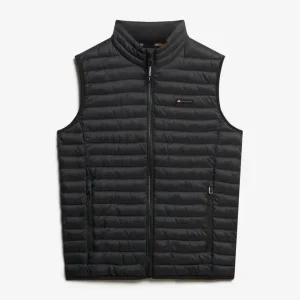
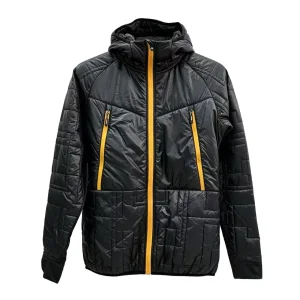
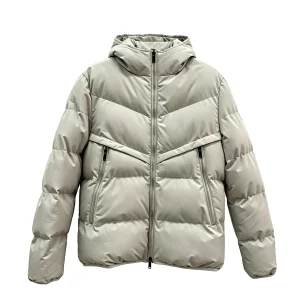
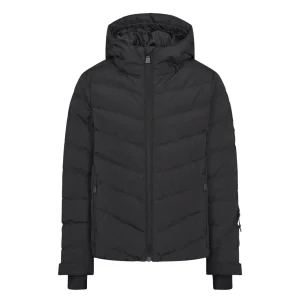
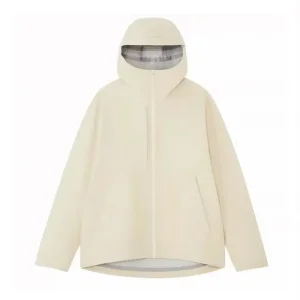
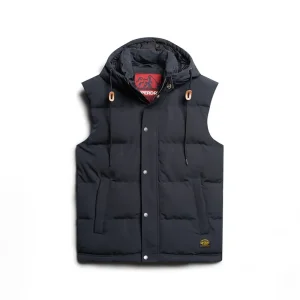
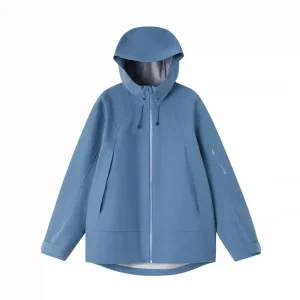
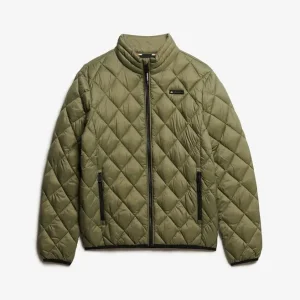
Explore additional high-demand apparel lines engineered by ZanQian Garment, demonstrating our multifaceted manufacturing versatility and heavy-stitch durability.
Preview how next-generation textile developments are reshaping ladies' shorty sleep sets, from phase-change microencapsulation to digital product passports.
Thermal regulation is advancing beyond passive breathability. Integrating microencapsulated paraffin waxes (PCM) directly into cellulosic viscose yarns enables the pajama fabric to absorb body heat when skin temperature spikes and release it during cooler midnight cycles.
Ahead of mandatory European Union eco-design directives, ZanQian is equipping pajama sets with woven scannable QR tags detailing exact yarn spinning mills, dye chemistry lot numbers, water recycling audit scores, and fiber-to-fiber recyclability profiles.
To eliminate post-consumer landfill waste, R&D is focused on 100% monomaterial knit constructions—including mono-modal elastane substitutes and 100% bio-based polyamides—allowing end-of-life chemical depolymerization without complex manual disassembly.
Clear, direct technical answers addressing minimum order volumes, lead times, custom labeling, and sample development workflows for international buyers.
Our standard production MOQ is typically 500 to 1,000 sets per style, which can be distributed across 2 to 3 colorways and standard size ranges (XS through 3XL). For custom piece-dyed shades requiring custom lab dips, the minimum depends on fabric dye vat capacities (approx. 300 kg per color batch).
Pre-production prototypes (proto samples) are delivered within 7 to 10 working days upon receipt of tech pack specifications and fabric confirmation. Upon proto approval and lab-dip sign-off, bulk production runs typically require 35 to 45 days, dependent on embellishment complexities and volume.
Yes. We offer end-to-end OEM branding: custom woven and heat-sealed neck labels, branded wash care tags compliant with US FTC or EU textile labeling acts, engraved pearlized buttons, branded drawstrings, and custom retail-ready packaging (frosted bio-polybags, ribbon wraps, or rigid gift boxes).
Our quotes clearly itemize CMT labor, fabric consumption, packaging, and local port clearance to Xiamen or Quanzhou port. Quotations are accompanied by technical spec sheets, fabric composition declarations, and full HS code classifications (typically Chapter 61 for knitted sleepwear) for accurate tariff estimations.
All dye lots are measured using digital spectrophotometers to maintain color variances strictly within Delta E < 0.8 under standardized D65 lighting. Fabric rolls are inspected using the 4-Point System prior to cutting to eliminate shading across tops and shorts.
Our quality assurance department operates continuous AQL 2.5 / 4.0 inspection standards. Every finished shorty set is audited for stitch density (10–12 stitches per inch), seam slippage, loose threads, accurate measurement grading tolerances (within ±0.5 cm), and metal detection safety.
