
Australia Alpine / Mining
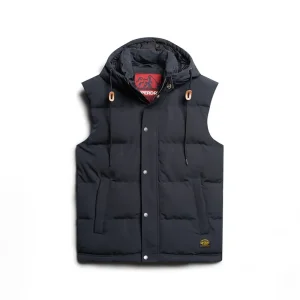
Engineered to balance high thermal retention with lightweight ergonomics, suited for dynamic temperature shifts from Victoria's alpine ranges to regional mining and urban centers.
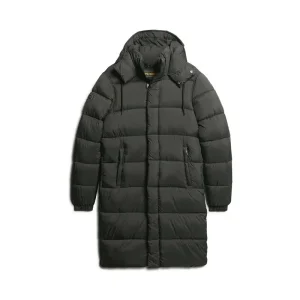
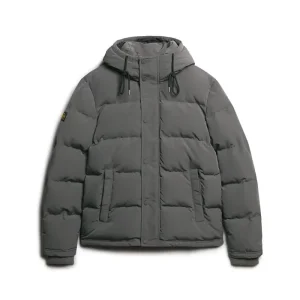
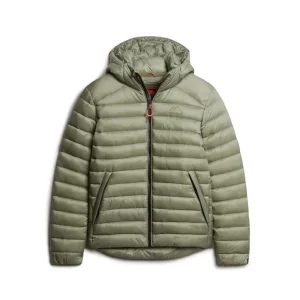
Australia's distinct geographic profile demands hybrid outerwear solutions capable of navigating extreme diurnal swings, rigorous industrial workplace safety frameworks, and high consumer eco-accountability.
Unlike standard European down jackets, industrial workwear in Australia must adhere strictly to AS/NZS 4602.1:2011 (High Visibility Safety Garments) and AS/NZS 1906.4:2010 (High Visibility Materials for Safety Disciplines). Mining personnel in the Pilbara, Bowen Basin, and Hunter Valley operate in environments with drastic diurnal temperature variations—dropping from 35°C daytime heat to sub-zero temperatures at night during winter months.
Thermal insulated garments for these sectors must integrate flame-retardant outer membranes, high-abrasion ripstop textiles, and hydrophobic synthetic lofts that maintain clo-values despite heavy industrial perspiration and particulate exposure.
The global market for technical insulated apparel is transitioning rapidly toward resilient, agile manufacturing hubs. Supply chain bottlenecks observed post-2022 led procurement managers across Sydney, Melbourne, and Brisbane to prioritize Tier-1 OEM/ODM manufacturers with consolidated supply chains—combining in-house baffle weaving, ultrasonic thermal bonding, and certified down handling under one roof.
The global demand for synthetic down blends (such as recycled micro-cluster polyesters and graphene-infused battings) is expanding at an estimated 8.4% CAGR, driven by cost stability, cruelty-free sourcing, and superior wet-weather insulation resilience.
Beyond heavy industry, the Australian lifestyle market demonstrates a massive surge in "Gorpcore" and high-performance urban commuter wear. In Melbourne, Canberra, and Hobart, consumers expect minimalist outerwear with extreme weather versatility. Urban commuters require lightweight 650+ fill-power insulated vests and longline puffers equipped with waterproof ratings of 10,000mm to 20,000mm hydrostatic head.
Sustainability expectations are non-negotiable: brands require OEKO-TEX Standard 100, Bluesign® certified face textiles, and Global Recycled Standard (GRS) fillings with non-fluorinated PFC-Free DWR (durable water repellent) finishes.
A rigorous breakdown comparing insulation types, outer shell lamination configurations, and baffle engineering methodologies suited for private labels and industrial distributors across Australia and New Zealand.
| Insulation Architecture | Clo Value (Warmth / Weight) | Hydrophobic Behavior | Typical Application Sector | AS/NZS & Eco Certification Alignment |
|---|---|---|---|---|
| RDS White Duck Down (700+ FP) 90/10 Ratio, Micro-Channel Quilted |
1.60 – 1.85 Clo/oz | Requires Hydrophobic DWR Down Coating to prevent wet-collapse. | Tasmanian Alpine Trekking, Victorian Ski Resorts, High-Tier Urban Commuter. | Responsible Down Standard (RDS), OEKO-TEX Standard 100 Class I. |
| Aerogel / Micro-Cluster Synthetic 100% Recycled PET Filament Clusters |
0.95 – 1.25 Clo/oz | Retains 92% of thermal retention when completely soaked; rapid dry-time. | Cold Storage Logistics, Heavy Wet-Weather Construction, Rail Infrastructure. | GRS (Global Recycled Standard), Bluesign® Approved, Microplastic Filter Safe. |
| Graphene-Infused Bio-Loft Conductive Lattice Carbon Web |
1.30 – 1.50 Clo/oz | Inherent anti-static, far-infrared reflection, antimicrobial odor suppression. | Offshore Oil & Gas Platforms (Bass Strait), FIFO Mining Camps, Heated Jackets. | Anti-static EN 1149-5 / AS/NZS static dissipation compliant base. |
| Thermore / High-Density Sheet Batting Needle-Punched Continuous Filament |
0.75 – 0.90 Clo/oz | Zero fiber migration; structural resilience against repeated industrial washings. | AS/NZS 4602.1 Hi-Vis Day/Night Workwear, Traffic Control, Municipal Crews. | ISO 15797 Industrial Laundering 50+ wash-cycle qualification. |
In high-precipitation zones like the Australian Snowy Mountains or Tasmania's Central Highlands, stitch-holes are prime points for water penetration and down leakage. Our factory deploys high-frequency Ultrasonic Seamless Baffle Welding. By thermoplastically fusing the face shell to the down-proof lining without needles, we eliminate over 10,000 stitch micro-holes per garment, creating a 100% windproof barrier that boosts overall thermal efficiency by up to 22% while extending garment operational lifespan.
Insulation is ineffective if human sweat cannot escape. When designing outerwear for Australian active sports and mining labor, we pair high-loft fillings with breathable microporous polyurethane (PU) or hydrophilic polyester membranes boasting Waterproof Ratings up to 20,000mm and Breathability exceeding 20,000 g/m²/24h. This ensures that latent body moisture generated during heavy physical exertion vents immediately before condensing into freezing liquid against the inner baffles.
From the arid, wind-blasted iron ore quarries of Western Australia to sub-Antarctic maritime fisheries, custom insulation profiles must match regional operational conditions.
Fly-in, fly-out (FIFO) workers in remote mining sites encounter sharp desert nights following scorching daylight. Garments engineered for this sector require packable hybrid construction: wind-resistant, tear-resistant 300D Oxford face textiles treated with dirt-repellent Teflon™ coatings, combined with compressible 120gsm synthetic batting that stores compactly into standard crew bags.
Industrial cold-store operators in major logistics corridors (e.g., western Sydney, Truganina Melbourne) function daily in walk-in freezers maintained at temperatures from -18°C to -30°C. Stationary or low-exertion warehouse staff require deep-loft multi-layer insulated thermal suits engineered with continuous thermal gaskets along cuffs, collars, and waist hems.
Mount Buller, Perisher, Thredbo, and the Tasmanian Cradle Mountain overland trail expose hikers and skiers to sudden blizzards, freezing sleet, and gale-force Southern Ocean winds. Commercial brands serving this demographic require hybrid 3-in-1 modular systems: an exterior 3-layer storm shell laminated to 20K/20K membranes over a zip-in detachable 750FP down-blend jacket.
Overcoming supply friction, fluctuating exchange rates, and lengthy sample lead times through our consolidated Quanzhou smart manufacturing hub.
We solve the classic cross-border design disconnect. Our R&D center operates sophisticated 3D CLO virtual prototyping software. Australian brands can submit 2D sketches or physical master samples and receive accurate digital drape simulations within 48 hours. Pattern modifications, baffle pitch adjustments, and grading across Southern Hemisphere sizing metrics (AU/NZ sizing standards) are completed digitally before cutting the first physical yardage.
Physical proto-samples are manufactured in our specialized quick-turn sample room and dispatched via priority air freight to Melbourne, Sydney, or Auckland in under 7 business days, slashing traditional seasonal development cycles by 50%.
Product recalls or compliance failures in the Australian market incur severe legal liabilities and catastrophic brand damage. Our manufacturing complex maintains a fully equipped in-house testing laboratory testing every textile roll and finished production batch against international and Australian performance benchmarks.
Anticipating the technological disruptions reshaping functional outerwear for Australasia and worldwide cold-weather supply lines.
Passive insulation has biological limits. The next frontier in workwear and alpine gear combines lightweight down baffles with ultra-thin carbon-nanotube heating tracks powered by 5V USB-C PD or 7.4V battery packs. ZanQian is already rolling out smart heated jackets featuring triple-zone regulation (lumbar, left chest, right chest) with smart Bluetooth micro-controllers, enabling wearers to customize micro-climates via mobile device applications.
With Australia's Seamless National Clothing Product Stewardship Scheme pushing for garment circularity, traditional multi-component jackets (nylon shell + down fill + polyester lining + metal zips) represent recycling nightmares. Our 2026 production roadmap centers around 100% Mono-Material Polyethylene Terephthalate (rPET) Garments: shell, membrane, insulation batting, zips, and sewing threads constructed from chemically uniform polyester, allowing post-consumer jackets to be ground and re-extruded into virgin-grade fibers without dismantling.
Addressing consumer sensitivities surrounding animal down and petroleum-derived microplastics, we are pioneering the integration of renewable biological battings derived from kapok, corn-based PLA, and algae bio-resins. These materials provide comparable loft-to-weight metrics to 600FP natural duck down while reducing the product's upstream greenhouse gas footprint by over 45%.
Clear, direct specifications, lead-times, minimum order quantities (MOQs), and compliance answers for global fashion brands, workwear importers, and private labels.
Explore our full range of field-tested thermal puffers, hybrid bodywarmers, commuter trench-puffers, and diamond-quilted performance shells manufactured to your exact technical specifications.
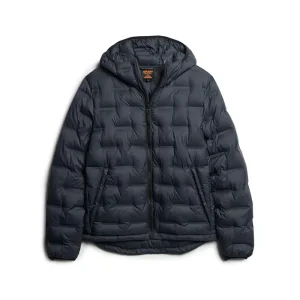
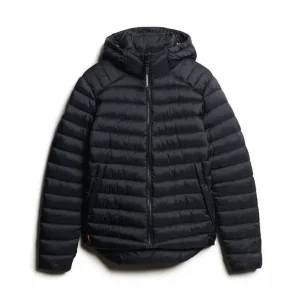
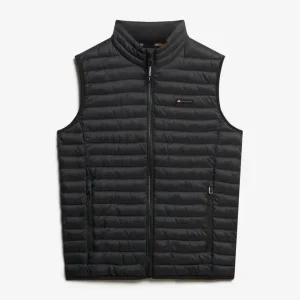
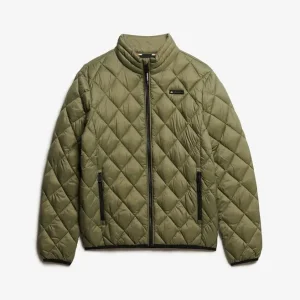
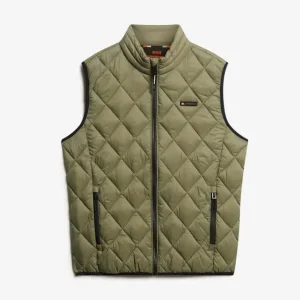
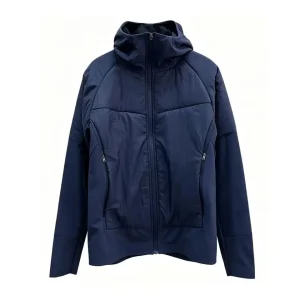
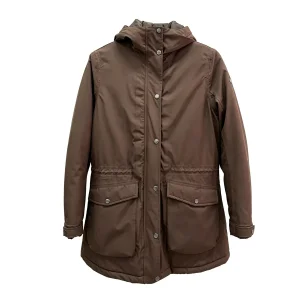
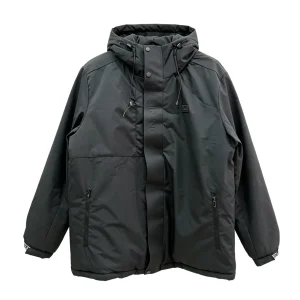
Partner with an authoritative, vertically integrated manufacturer equipped to handle tech pack engineering, fabric matching, rapid sampling, and bulk export to Australian main ports.