Featured technical shells and composite trousers engineered for intense Lake Michigan gale-force headwinds, transition-season sleet, and sub-zero Midwest trail expeditions.
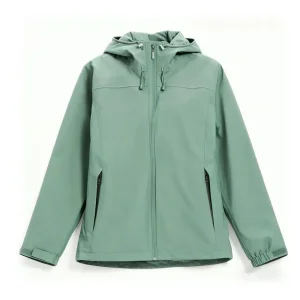
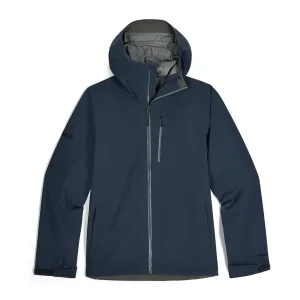
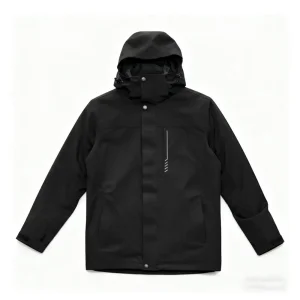
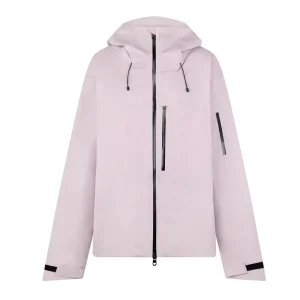
Understanding regional demand dynamics across Cook, DuPage, and Will counties: from high-density retail clusters to inland intermodal logistics hubs and extreme lake-effect environmental stressors.
Chicago's geographic alignment creates severe weather variability. Outerwear destined for this market must withstand sudden barometric shifts, sustained 30 to 45 mph winds funneling through the urban skyscraper canyons and across the 18.5-mile Chicago Lakefront Trail, as well as rapid transitions between driving rain and lake-effect blizzards.
Traditional single-layer consumer raincoats fail under continuous freezing rain accompanied by high moisture vapor pressure. Commercial buyers require hybrid membrane architectures: hydrophilic coatings on the body interior for moisture evacuation during active movement, coupled with mechanical stretch face fabrics coated in C0 durable water repellent (DWR) compounds capable of shedding sub-zero sleet without stiffening.
Chicago serves as the paramount rail and logistics nexus of North America. The Class I rail terminals in Joliet, Elwood, and CenterPoint Intermodal Center allow international container shipments landed via West Coast ports or Prince Rupert to arrive directly in the Chicago freight ring within 4 to 6 business days.
This geographic efficiency gives Chicago-based outdoor retail chains (spanning the North Michigan Avenue flagship stores, Lincoln Park independent specialty outfitters, and regional distribution networks across Illinois, Wisconsin, and Indiana) a structural advantage. Importers and OEM brand licensors can maintain optimized inventory levels by partnering with agile overseas factories capable of fast replenishments and container-load consolidations directly through Chicago customs clearance ports.
Comprehensive cost breakdown for wholesale importers, commercial distributors, and private-label retail brands. Estimated pricing reflects volume orders, specialized membrane laminations, and international freight parity landed at Chicago distribution centers.
| Garment Classification | Core Technical Construction | MOQ Tier | FOB Port Cost (Unit) | Est. Landed DDP Chicago | Key Testing & Cert Standard |
|---|---|---|---|---|---|
| 2.5L All-Weather Trail Shell | 50D Ripstop Polyester, 10k/10k PU Membrane, Fully Taped Seams, PFC-Free DWR | 500 - 1,000 pcs | $14.80 - $17.50 | $18.90 - $21.80 | AATCC 127 / ISO 811 Hydrostatic |
| 3-Layer Extreme Expedition Jacket | 70D Nylon Taslan, 20k/20k Microporous PTFE/PU, Cordura Reinforcements, YKK Aquaguard | 300 - 800 pcs | $28.50 - $34.00 | $33.50 - $39.80 | JIS L 1099 B-1, 100kPa Burst Test |
| Hybrid Thermal Insulated Shell | Recycled Polyester 20D Ripstop Shell + 100g PrimaLoft or Sustans Fill + 4-Way Fleece | 500 - 1,500 pcs | $21.00 - $25.80 | $25.20 - $30.50 | ASTM D1518 Thermal Resistance |
| Ultrasonic Seamless Bonded Jacket | 3-Ply Stretch Poly-Spandex, Zero-Stitch Laser Cut, Heat-Pressed Adhesive Welds | 500 - 1,000 pcs | $29.50 - $36.00 | $34.80 - $42.20 | ISO 13935-2 Seam Strength Weld |
| Technical Stretch Hiking Pants | 92% Nylon, 8% Spandex 4-Way Dobby Weave, Articulated Knees, Gusseted Crotch, C0 DWR | 600 - 2,000 pcs | $11.20 - $14.50 | $14.30 - $17.90 | AATCC 22 Water Repellency >90 |
| Reinforced Alpine Trekking Trousers | 500D Cordura Seat & Knee Panels, 20k Waterproof Internal Membrane, Scuff Guards | 400 - 1,200 pcs | $18.40 - $22.90 | $22.60 - $27.40 | ASTM D4966 Martindale Abrasion |
| Fleece-Lined Winter Windproof Pants | 320g Bonded Softshell (Interlock Face + TPU Film + Grid Microfleece Interior) | 500 - 1,500 pcs | $13.60 - $16.90 | $17.10 - $20.80 | ASTM D737 Air Permeability <1 CFM |
| Industrial Multi-Pocket Utility Pant | Poly-Cotton Ripstop 240gsm, Teflon Shield Fabric Protector, Triple Stitched Inseams | 800 - 3,000 pcs | $12.50 - $15.20 | $15.40 - $18.50 | ANSI/ISEA & NFPA Compliance Ready |
* Note: Prices reflect baseline OEM/ODM specs. Final quotes vary by exact grammage, custom branded trims, packaging, exchange rates, and freight surcharges to Chicago terminal rail yards.
Overcoming supply chain vulnerability, lead-time slippage, and seam failure through an integrated vertically operated manufacturing footprint.
We eliminate delamination through precise reactive polyurethane (PUR) hot-melt adhesive applications. By calibrating molecular weight and dot-matrix glue deposition density, our 3-layer fabrics maintain exceptional breathability without risking blistering during prolonged sub-zero Chicago freeze-thaw cycles.
Traditional needle penetrations introduce thousands of vulnerable micro-perforations into technical outerwear. Our automated ultrasonic welding and robotic hot-air sealing stations melt synthetic polymers at the junction, creating a hermetic bond stronger than the virgin textile substrate.
We streamline cross-border logistics through designated US Customs Broker partners in Chicago-O’Hare (ORD) and the Union Pacific / BNSF intermodal ramps. Programs can be structured on FOB Xiamen/Quanzhou, CIF Chicago Inland Port, or complete DDP store-door delivery.
Ensuring complete legal conformity with municipal, Illinois state, and federal trade statutes, including stringent chemical bans and worker welfare certifications.
The state of Illinois has advanced strict consumer safety rules regarding Per- and Polyfluoroalkyl Substances (PFAS) in apparel. Long-chain C8 and short-chain C6 fluorocarbon water-repellent treatments have been entirely phased out across our supply lines.
All hiking jackets and pants engineered for Chicago distributors utilize third-party verified C0 fluorine-free treatments (bio-based silicone and plant-derived wax polymers). These finishes achieve spray ratings exceeding 90 (AATCC 22) after 20 washing cycles without generating persistent biological contaminants, fully conforming to Illinois Environmental Protection guidelines and federal TSCA Section 8(a)(7) reporting standards.
Procurement teams from institutional buyers, public safety departments, and upscale retail brands operate under rigorous vendor audit matrices. Our manufacturing facilities are certified to international benchmarks:
Specific performance testing parameters calibrated for regional recreational corridors, harsh urban transit, and outdoor industrial workloads.
Encompassing over 300 miles of multi-use unpaved trails along the Des Plaines River and Palos Trail System, where humidity and damp undergrowth dominate spring and autumn. Pants require mechanical 4-way stretch fabric with DWR barrier coating against dew-soaked brush, reinforced hems to mitigate limestone dust abrasion, and articulated knees for unrestricted stride cadence.
Winter along the 18.5-mile lakefront exposes athletes to sustained sub-freezing headwinds off Lake Michigan. Jackets require wind-permeability ratings below 1.0 CFM, three-way adjustable helmet-compatible storm hoods with stiffened visors that do not collapse under 40 mph gusts, and fleece-lined high collar wind dams that seal warmth at the carotid arteries.
Utility contractors, civil engineers, and environmental survey teams operating across the Chicago metropolitan rail yards and shipping canals require crossover technical apparel. Garments combine military-spec 500D Cordura reinforcement at friction points with discreet low-profile utility storage pockets designed for digital tablets and testing probes.
Strategic development initiatives integrating active heating filaments, bio-circular mono-materials, and artificial intelligence-assisted pattern engineering.
To counteract the severe -20°F Chicago Polar Vortex without overburdening hikers with cumbersome bulk, we are standardizing integrated ultra-thin graphene heating webs. Operating via safe 5V USB power banks or 7.4V proprietary packs, these panels emit far-infrared energy to core chest and lumbar zones with 3-tier microcontroller temperature feedback.
Traditional multi-layer jackets mix nylon face fabrics with polyurethane membranes and elastane stretch liners, rendering chemical recycling impossible. Our 2026 roadmap introduces 100% Mono-Polyethylene Terephthalate (Mono-PET) systems: face, membrane, seam tape, and sewing thread fabricated from homogeneous recycled polyester for closed-loop end-of-life circularity.
Utilizing high-resolution anthropometric digital sizing data tailored to North American demographic profiles, automated CAD grading algorithms eliminate fabric off-cut waste down to below 4%. Tension-free automatic spreading machines preserve yarn alignment, preventing torsional seam twisting after retail laundering.
Essential guidance on minimum order quantities, custom prototyping, Chicago customs clearance, seam-tape longevity, and technical performance testing.
Our standard manufacturing MOQ is 500 pieces per style, which can typically be split across two standard colorways (e.g., 250 Black / 250 Navy) and a standard North American size breakdown (S through 3XL). For specialized high-end 3-layer seamless welded jackets utilizing proprietary technical membranes, trial orders of 300 pieces can be accommodated subject to raw fabric surcharge adjustments.
Every textile lot procured for our OEM/ODM production runs undergoes rigorous chemical screening by independent testing laboratories (such as SGS or Intertek). We provide complete Total Organic Fluorine (TOF) laboratory reports proving non-detectable levels below 50 ppm, certifying compliance with Illinois state legislation and safeguarding brand liability against regulatory recalls.
Prototyping and fit sampling require 7 to 12 working days. Once pre-production samples (PPS) and lab dips are signed off, bulk manufacturing takes 40 to 50 days. Ocean freight from our Xiamen facility to West Coast ports with intermodal rail transit directly to Chicago distribution centers takes approximately 18 to 22 calendar days, bringing the total cycle from sign-off to warehouse door to roughly 70 to 80 days.
We perform internal hydrostatic pressure checks up to 100kPa on all heat-taped junctions both before and after undergoing 10 continuous machine wash and tumble cycles. In addition, sample swatches undergo -25°C cold bend flexibility trials to verify that polyurethane bonding glues do not crystallize, crack, or suffer peel-strength decay when exposed to intense Midwest sub-zero conditions.
Yes. Our heated apparel line integrates carbon fiber or graphene heating elements that pass UL 2054, UN 38.3, and FCC Part 15 Class B testing standards. Battery packs, controllers, and wiring conduits are built with waterproof silicone connectors that permit complete gentle machine washing without risk of electrical degradation.
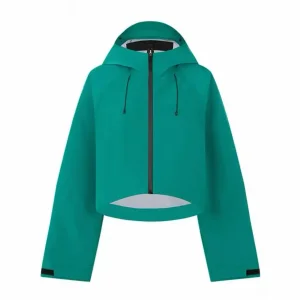
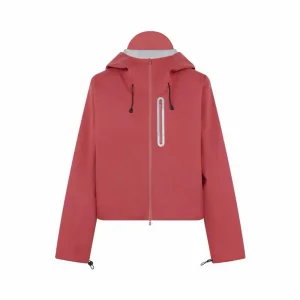
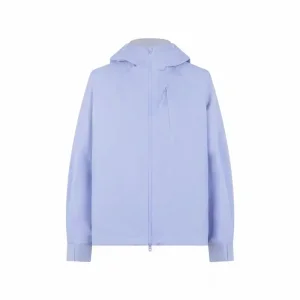
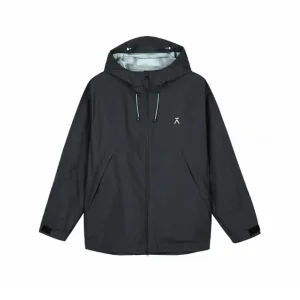
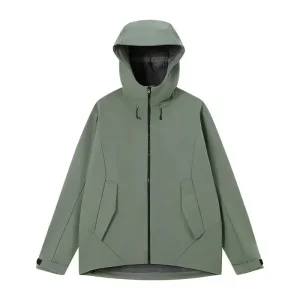
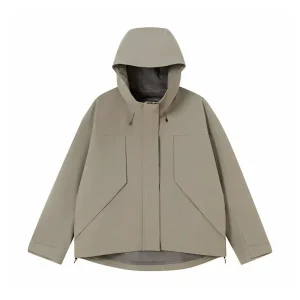
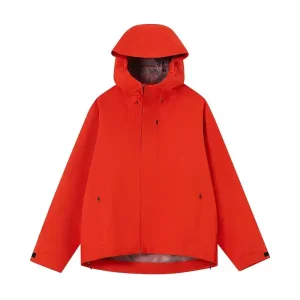
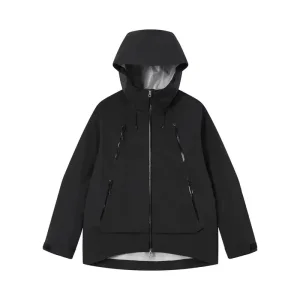
Explore our complete manufacturing portfolio: engineered for endurance, daily urban commuting, multi-day alpine trekking, and extreme weather resilience.
Request accurate OEM/ODM costing, material swatch lab books, and certified performance test results. Our engineering team responds within 24 business hours with direct factory quotations.
