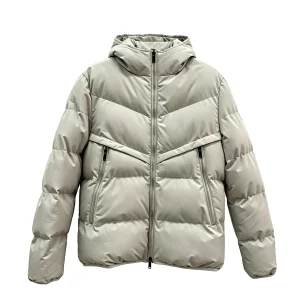
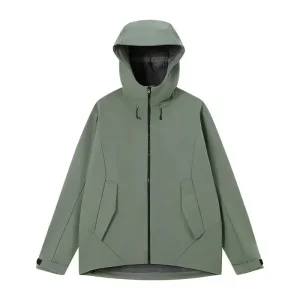
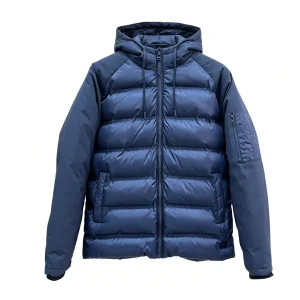
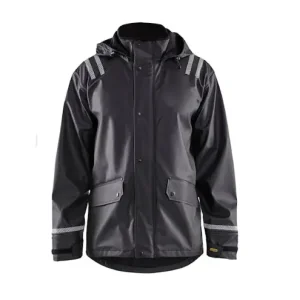
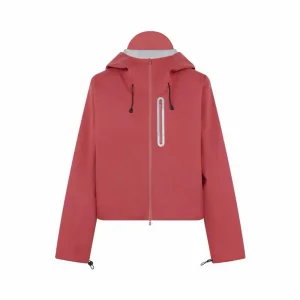
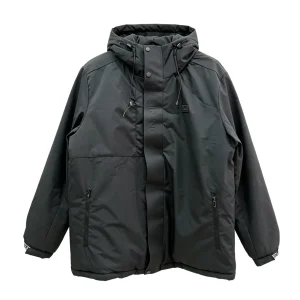
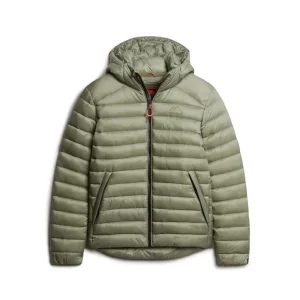
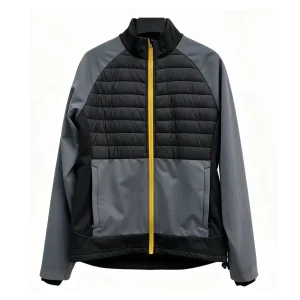
High-demand functional outdoor apparel configurations engineered for alpine performance, sub-zero commuting, and versatile winter shielding.
Navigating micro-climates, shifting regulatory compliances, and supply line re-shoring trends for professional apparel brands.
Canada’s jacket procurement ecosystem represents one of the most discerning commercial apparel sectors globally. Spanning maritime temperate moisture in British Columbia to the sub-zero continental freezes across the Prairies, Ontario, and Quebec, commercial sourcing cannot rely on single-substrate manufacturing. Sourcing directors today face two divergent yet simultaneous consumer vectors:
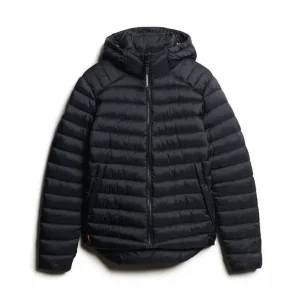
First, Urban Commuter & Hybrid Casual Wear demands minimal baffle profiles, sleek matte finishes, lightweight packability, and high moisture vapor transmission rates (MVTR) for transitional transport (subways, vehicles, indoor offices). Second, Technical Alpine & Industrial Field Wear dictates abrasion-resistant high-denier cordura-blended face textiles, seam sealing capable of sustaining continuous freeze-thaw cycles, and heavy down or synthetic insulation rated to ASTM F2732 human comfort models.
Additionally, Canadian retailers operate under stringent Canadian General Standards Board (CGSB) safety parameters, alongside intensifying municipal bans on polyfluoroalkyl substances (PFAS/PFCs). ZanQian's production lines directly address this regulatory transition through PFC-free Bio-DWR (Durable Water Repellent) surface treatments.
Globally, outdoor apparel manufacturing is experiencing a fundamental structural shift. While cut-and-sew operations for basic cotton and polyester fleece have migrated toward low-cost jurisdictions, technical shell construction, welded-baffle insulation, and electronic smart heated clothing remain anchored in high-precision, vertically integrated clusters like Quanzhou, China.
Technical performance wear necessitates specialized machinery: computerized seam sealing stations, ultrasonic bonding rigs, laser cutting beds, and calibrated chamber presses. Without this, seam failure rates exceed 8% upon Canadian winter field testing.
For Canadian brands looking to protect margins amid volatile ocean freight rates and fluctuating currency values, partnering directly with a source manufacturer eliminates third-party import markups, cuts prototype-to-shelf lead times by up to 35%, and guarantees audit-ready batch records directly traceable to certified yarn spinners.
From Pacific rain squalls to Nunavut industrial camps, our jacket constructions are calibrated against precise atmospheric baselines.
High humidity and relentless rain require waterproof breathability over pure loft. Built specifically for Vancouver, Vancouver Island, and the Coast Mountains.
Sub-zero biting winds across Alberta, Saskatchewan, Manitoba, and Quebec require wind-proof barriers and superior thermal baffle stability.
Heavy oil & gas, forestry, and mining sectors operating in the Yukon, NWT, and northern Alberta need extreme durable performance.
Transparent data structures to expedite tech pack evaluations, RFQ approvals, and landed cost models.
| Jacket Category | Outer Membrane / Face Shell | Thermal / Fill Spec | Target Weather Class | Certifications / Testing | Canadian Landing MOQ |
|---|---|---|---|---|---|
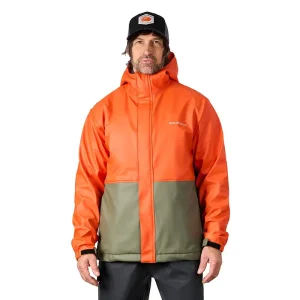
| Alpine Technical Shell | 100% Recycled Nylon 3-Layer Ripstop + ePTFE / PU | Unlined / Micro-Grid Wicking Scrim | -10°C to +15°C (Wet Alpine) | AATCC 127 (20k mm), ISO 11092 RET < 6 | 500 pcs/style |
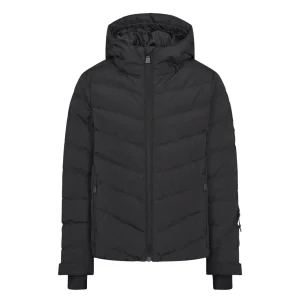
| Sub-Zero Puffer Parka | High-Density Mechanical Stretch 50D Poly + Bio-DWR | 90/10 White Duck Down (700FP) or Graphene Synthetics | -35°C to -5°C (Severe Cold) | IDFL Certified Down, RDS Compliant | 300 pcs/style |
| Active Hybrid Softshell | 4-Way Stretch Double Weave bonded with Micro-Fleece | Zoned Synthetic 80gsm Chest Fill | -5°C to +12°C (Aerobic Winter) | ASTM D5034 (Tensile), OEKO-TEX Standard 100 | 500 pcs/style |
| Smart Heated Core Jacket | Water-Resistant Peached Poly Softshell + Heat-Seal Liners | Multi-Zone Carbon Nanotube Heating + 120gsm ClusterLoft | -30°C to +5°C (Controllable) | CE, FCC, RoHS, UN38.3 (Battery Safety) | 200 pcs/style |
| CGSB/CSA Industrial Workwear | 300D Oxford Polyester with PU Breathable Backing | Quilted Flame-Retardant or Heavy Polyfill | Extreme Worksite Cold | CSA Z96-15, ANSI/ISEA 107, ISO 20471 | 500 pcs/style |
Integrating sustainable circular chemistry, precision automated seam assembly, and intelligent heating systems.
Complete phase-out of fluorinated C6/C8 chemistries. Transition to plant-derived bio-based membranes with superior resistance to salt, oil, and wet snow abrasion.
Replacing standard sewing threads in insulated puffers with ultrasonic welded ribbons, completely eliminating needle punctures, cold bridging, and down leakage.
Transitioning from discrete heating elements to flexible, continuous graphene ink layers that offer uniform heat coverage, zero bulk, and 50+ wash cycle ratings.
Integration of scannable woven QR/NFC chips linking each Canadian batch to audited fiber origins, tier-1 dye houses, and verified carbon-offset reports.
Actionable answers to help Canadian apparel importers streamline customs clearance, sampling timelines, and quality protocols.
We supply complete export declaration packs, including precise Harmonized System (HS) classifications (e.g., Chapter 62 for woven technical outerwear), country-of-origin certificates, fiber percentage composition statements, and Canadian Textile Labelling Act-compliant bilingual care tags (English/French).
We benchmark fabrics against ASTM D751 (Cold Crack Resistance down to -40°C) to prevent membrane stiffening and delamination. Zipper teeth (YKK/SBS cold-grade nylon) and PU seam sealing tapes are thermal-cycle tested in our in-house lab through 20 wash cycles followed by sub-zero chamber flex tests.
Yes. While standard terms are FOB Quanzhou or Xiamen, we maintain long-term partnerships with freight forwarders operating direct express consolidation to Port of Vancouver and Port of Montreal, enabling Delivered Duty Paid (DDP) quotes straight to warehouses across Richmond, Mississauga, or Calgary.
Prototype sample development takes 7–10 working days using on-hand functional yardage. Once the pre-production sample (PPS) is signed off, bulk production across our 6+ digitalized lines takes 45–60 days, followed by 18–24 days ocean transit to West Coast Canadian ports.
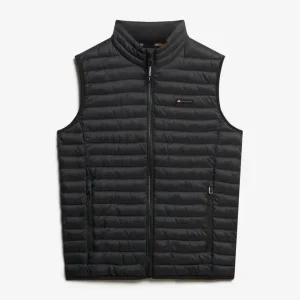
Review our extensive export range spanning hydrostatic shell jackets, commuter wind coats, insulated vests, and active winter shells.