
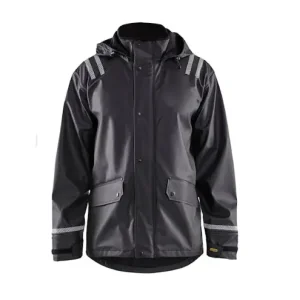
DIN EN 343 Compliant Shell
Engineered for high-abrasion resistance, hydrostatic water head excellence, and ergonomic utility matching industrial and commercial specifications across Frankfurt, Hamburg, and Munich supply corridors.
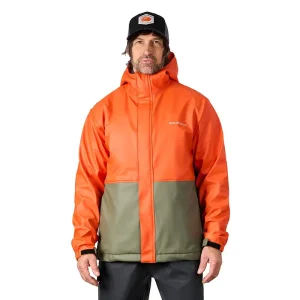
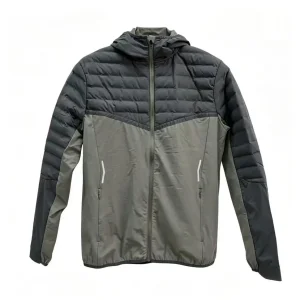
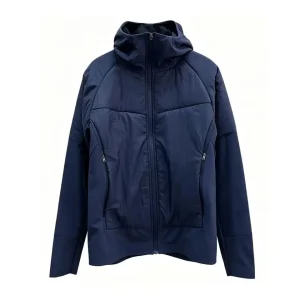
Strategic analysis of B2B procurement patterns across Germany's manufacturing, logistics, municipal services, and premium outdoor leisure sectors.
Germany's maritime-to-continental climatic shift subjects outdoor service operators, couriers, track construction workers, and agricultural engineers to sustained precipitation, sleet, and gale-force wind conditions. In industrial hubs spanning the Ruhr Valley to Baden-Württemberg, rain jackets and industrial ponchos are not viewed as simple garments; they serve as critical Personal Protective Equipment (PPE) that governs worker uptime, thermal stability, and job-site safety.
Procurement directors within German corporate conglomerates evaluate wet-weather gear through quantitative metrics: hydrostatic head test stability after 50 industrial washing cycles, tensile tear strength on ripstop grids under mechanical stress, and ergonomic pattern designs that allow complete range of motion without exposing the lower lumbar zone during heavy lifting.
The German market bifurcates into two stringent categories: high-visibility, flame-retardant industrial rainwear governed by statutory employer liability insurance associations (Berufsgenossenschaften), and high-tier functional outdoor apparel demanded by eco-conscious German consumers who frequent hiking paths in Bavaria and the Black Forest.
Both segments converge on one core requirement: unwavering material accountability. Tier-1 buyers demand full transparency in seam-sealing polyurethane tape adhesion, PFC-free durable water repellent (DWR) surface formulations, and verified thermal transfer coefficients that mitigate heat loss in sub-zero downpours.
Importers operating out of the Ports of Hamburg and Bremerhaven require integrated OEM/ODM manufacturing partners capable of balancing scale in Asia with precision delivery timetables. ZanQian Garment operates specialized manufacturing cells in Fujian with seamless links to major German freight hubs, maintaining an end-to-end documentation audit trail compliant with German customs and European customs safety declarations.
Through our digital order management systems, German brand partners track raw material procurement, hydrostatic batch testing, inline seam tension validation, and final container stuffing in real time, virtually eliminating lead time variance across seasonal catalog drops.
In Germany, the CE marking for protective rainwear requires strict adherence to DIN EN 343:2019. Apparel must attain Class 4 water penetration resistance (≥ 20,000 Pa after pre-treatment) and Class 4 water vapor resistance (RET ≤ 15 m²Pa/W). Compliance documentation is scrutinized by German technical inspection bodies (TÜV, Hohenstein Institute), making unverified overseas suppliers unusable for German tenders.
ZanQian's testing laboratory pre-validates every production roll against these exact European test benchmarks before cutting commences, guaranteeing zero import rejection risks.
Architecting an unyielding, high-yield supply relationship for international brands, government concessionaires, and industrial distribution chains.
Enterprise sourcing for technical weatherproofing garments involves managing thermal barriers, microporous breathability membranes, chemical lamination bonds, and hydrostatic seals under rigorous production cycles. Sourcing teams from Munich to Vancouver encounter severe failure vectors when suppliers lack vertical production mastery: seam tape delamination under low temperatures, membrane blistering during ultrasonic bonding, and dye lot variance across high-visibility fabrics.
| Performance Dimension | Standard Enterprise Baseline | German / EU High-Performance Requirement | ZanQian Garment Manufacturing Delivery |
|---|---|---|---|
| Hydrostatic Pressure (Waterproofness) | 5,000mm to 10,000mm H₂O (AATCC 127) | ≥ 20,000mm H₂O (ISO 811 / DIN EN 343 Class 4) | Tested to 22,000mm H₂O utilizing 3-layer microporous ePTFE/PU laminate matrices |
| Water Vapor Resistance (Breathability) | 5,000 g/m²/24h (JIS L 1099 B-1) | RET < 6 m²Pa/W (ISO 11092 Hohenstein Method) | Customized monolithic/hydrophilic membranes delivering RET 3.8 to 5.2 m²Pa/W |
| Seam Sealing & Welded Baffle Integrity | Single-ply PU tape, 18-20mm width | 3-layer co-polyamide / TPU tape, 22mm width with ≥ 25N/5cm peel strength | Computer-controlled hot-air welded tape systems with 100% seam stress validation |
| Chemical Safety & Fluorine Ban | C6 DWR fluorocarbon finish | 100% PFAS-Free, Zero C6/C8, REACH Annex XVII compliant | Plant-based and silicone-modified DWR formulations achieving 90/10 spray rating after 20 washes |
| Supply Chain Due Diligence | Basic BSCI tier-1 certification | German LkSG (Supply Chain Act) traceability to tier-3 raw material sources | Fully digitized ERP ledger tracking yarn origin, chemical batch numbers, and environmental audits |
Exploring the bi-component laminates, monolithic films, and micro-welding paradigms defining the next decade of wet-weather personal protection.
Technical rain jacket architecture centers upon membrane preservation. A standard 2-layer jacket bonds an outer shell to a waterproof membrane, protected merely by a loose hanging mesh. While lightweight, it suffers premature abrasion failure under heavy backpack harnesses or utility toolbelts.
For rigorous German commercial use, ZanQian specializes in 3-Layer (3L) monolithic structures. We sandwich an ultra-thin hydrophilic polyurethane or microporous ePTFE film between a high-tenacity nylon 6,6 ripstop exterior and a micro-denier circular knit tricot backer. This integrated sandwich prevents bodily sebum and skin oils from contaminating the membrane while boosting puncture and tear resistance above 180 Newtons.
For emergency rain ponchos and ultra-packable cycling gear, our 2.5-layer dry-touch ceramic print technology deposits a raised geometric matrix over the internal barrier, eliminating the tacky feeling of bare membranes against bare skin without adding the weight of a textile backer.
The weakest link in any waterproof poncho or technical jacket is the stitch penetration hole made by sewing needles. A single jacket can contain over 1,500 needle perforations, each representing an immediate point of water ingress under hydrostatic load.
ZanQian engineers eliminate this vulnerability via calibrated pneumatic hot-air sealing machinery operating at 320°C to 380°C with digital pressure feedback loops. We formulate customized adhesive viscosity profiles suited to specific membrane substrates, ensuring that the melt flows into every microscopic cavity of the thread loop without thermal degradation of the face textile.
Crucial stress junctures—including hood apex joints, armscye intersections, and pocket bellows—are bolstered with laser-cut geometric reinforcement discs, guaranteeing seam longevity under severe gusting winds and violent physical strain.
Strategic deployment of non-toxic chemistry, circular mono-material polymer streams, and intelligent thermal apparel architectures.
Phasing out per- and polyfluoroalkyl substances across all supply chains. Transitioning entire base laminate yards to bio-based aliphatic polyurethanes sourced from non-food agricultural biomass, achieving identical contact angles (>110°) without environmental persistence.
Eliminating textile sorting complexity by engineering rain garments where the outer woven fabric, membrane barrier, adhesive layer, seam tape, and zipper teeth are manufactured entirely from circular Polyethylene Terephthalate (rPET), enabling single-shred mechanical recycling.
Embedding flexible graphene printed circuit tracks and micro-thermoelectric junctions directly within rain poncho and jacket laminate layers, actively regulating interior humidity levels and preventing internal condensation buildup during high-aerobic output in heavy rain.
Full-spectrum legal defense against customs seizures, product liability disputes, and corporate due diligence penalties under European Union jurisprudence.
Germany’s Supply Chain Due Diligence Act (LkSG) imposes severe administrative fines—reaching up to 2% of annual global turnover—on enterprises that fail to identify, prevent, or remediate human rights and environmental violations within their supply tier. Sourcing from opaque brokers in Asia represents an existential risk for German procurement executives.
ZanQian Garment operates an open-book production model. Our facilities in Quanzhou provide audited, verifiable tracking of working hours, occupational safety protocols, fair wage remuneration, wastewater effluent chemical testing, and independent BSCI / Sedex SMETA audit documentation accessible to our clients' compliance officers at all times.
Under EU Regulation (EC) No 1907/2006 (REACH), all textiles imported into Germany must be completely free from Substances of Very High Concern (SVHC) exceeding 0.1% weight by weight. This includes strict thresholds on organotin compounds, phthalates, short-chain chlorinated paraffins (SCCPs), and toxic heavy metal mordants.
All fabrics, reflective striping, shock cords, and zippers utilized in ZanQian rainwear are certified to OEKO-TEX Standard 100 and conform to strict REACH Annex XVII chemical restrictions. Laboratory gas chromatography-mass spectrometry (GC-MS) verification reports are provided for every dye lot and fabric delivery, guaranteeing seamless customs clearance at Hamburg and Rotterdam.
Combining 20+ years of functional outerwear mastery with high-output lean production lines located in Quanzhou, Fujian.
Founded on a commitment to mechanical durability and technical precision, ZanQian Garment Co., Ltd. operates a vertically integrated 5,000+ square meter manufacturing facility staffed by over 150 master apparel technicians. Operating six dedicated lean manufacturing lines, our facility outputs over 80,000 technical garments monthly, serving as an original equipment manufacturer (OEM) and original design manufacturer (ODM) for market leaders across Europe and North America.
Our competitive advantage lies in deep specialization: we do not produce generic fashion apparel. Every machine station, ultrasonic cutter, and hot-air welding unit is calibrated exclusively for technical shell construction, bonded down baffles, heated functional garments, and waterproof high-durability raincoats.
Our internal R&D design studio develops between 30 and 50 original, factory-tested styles each month, allowing German brand clients to short-circuit development timelines by selecting pre-engineered base patterns and pairing them with proprietary brand accents, bespoke membrane performance levels, and localized sizing profiles.
Every single production batch undergoes standardized testing protocols before dispatch:
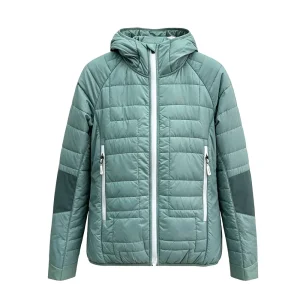
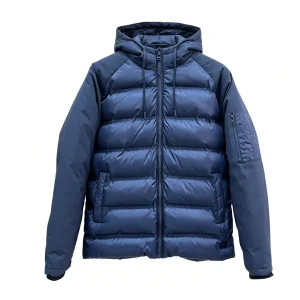
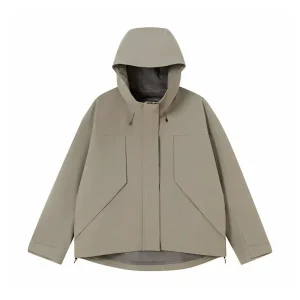
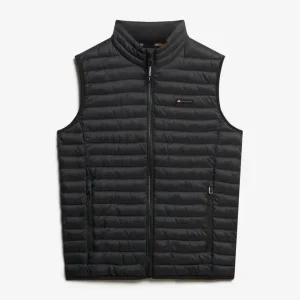
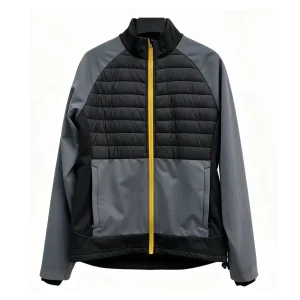
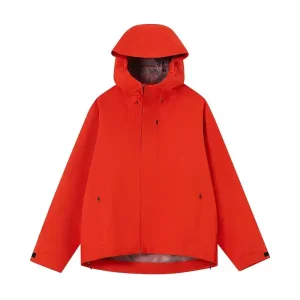
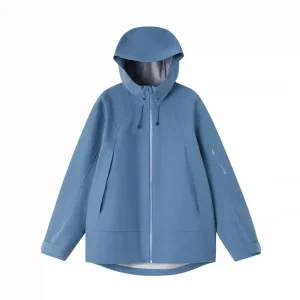
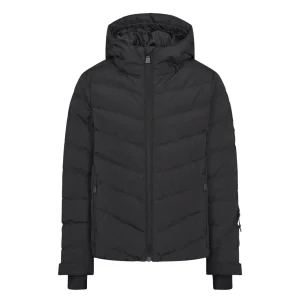
Advanced functional shells, hybrid thermals, insulated outer layers, and ultra-light packable weather systems available for OEM custom branding.
Precise engineering and contractual solutions addressing minimum order quantities, certification validations, logistical corridors, and PFAS compliance.
Consult with our lead textile engineers and commercial merchandising specialists today. Submit your technical packs, target membrane specifications, and production quantities to receive a comprehensive manufacturing assessment and pricing breakdown within 24 hours.